
The Stolen Fifteen Thousand
La uruguayaThe cash Lucas sees as the means to reclaim his life becomes the focus of the day’s mounting exposure and violent loss.
increasing Bearing strength in each event
 decreasing
Bearing strength in each eventdecreasingFees Under Restrictions

Money Across Borders
The exchange-rate problem
Lucas’s foreign publishers owe him advances, but a transfer into Argentina would convert the dollars at an unfavorable official rate and incur taxes. Collecting cash in Uruguay appears economically necessary.
A risky workaround
The plan depends on crossing back with more dollars than allowed. The opportunity promises relief from household debt while creating legal and personal exposure.
A Future Bought in Notes

Withdrawal
The amount collected
Lucas asks for fifteen thousand dollars and receives the money despite the branch’s usual preference for advance notice. He also exchanges some funds into Uruguayan pesos.
Imagined work time
The cash appears to buy nine or ten months for writing, debt repayment, home repairs, and childcare. Lucas’s confidence rests on treating money as usable time and creative freedom.
Hiding the Fajo

Concealment
A body made into a hiding place
Afraid of being watched, Lucas transfers the cash from his jacket into a money belt under his clothes. The money’s physical presence makes every movement feel suspicious and uncomfortable.
Fear follows success
He eats and tries to relax, but imagines being confronted by a thief. The cash has become both the solution to his problems and the danger he carries through the city.
The Beach Attack

Money Taken
Sudden violence
Two men attack Lucas and Guerra near the shore. They strike him, remove the money belt, and take his backpack and other belongings before escaping, apparently by motorcycle.
Loss becomes disorientation
Lucas runs in anger and disbelief, then returns to Guerra with the ukulele still in hand. He has lost the money, phone, keys, cards, and much of his ability to make sense of the day.
The Money That Wasn’t His
Reframing the Loss
A mentor’s provocation
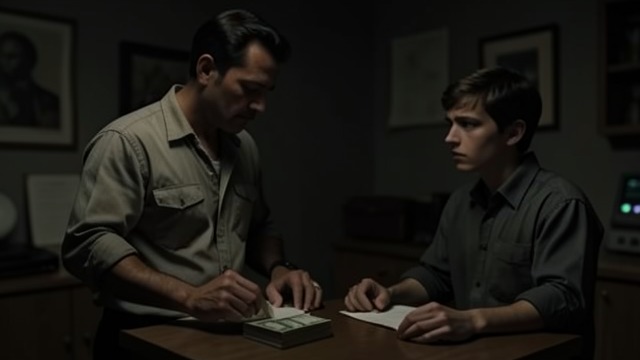
Enzo argues that Lucas had not felt the advance money was truly his because it represented a debt to publishers and a burden of future work. Lucas resists the interpretation but cannot dismiss it.
Practical consequence
Lucas gives Enzo some of his remaining pesos as a loan, leaving with less money but a clearer decision to return home. The vanished cash becomes an unwelcome release from his grand plan.
In the weeks before the September trip
Around one o'clock, inside the Montevideo bank
Shortly after the withdrawal, at La Pasiva
Late afternoon at Playa Ramírez
That evening, at Enzo’s apartment
